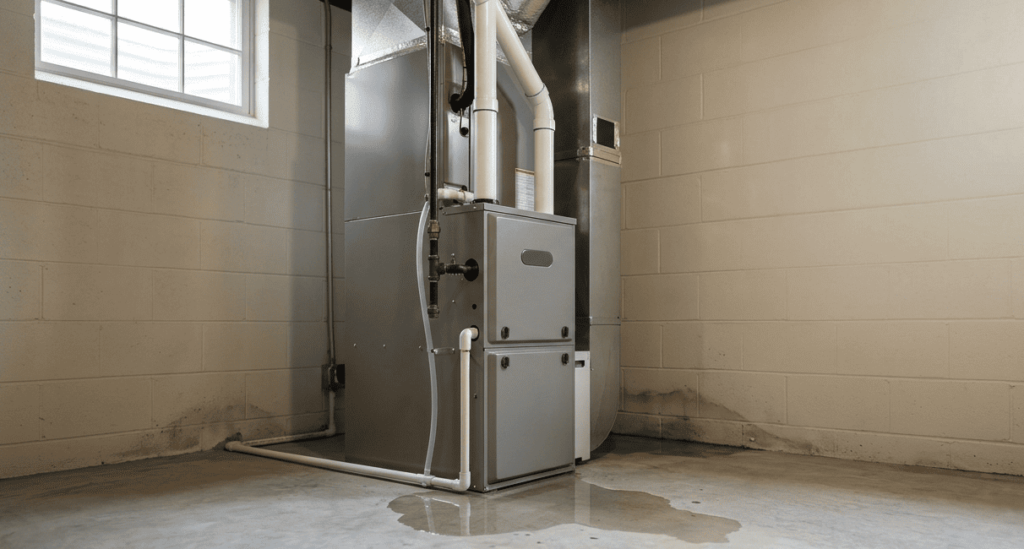
Most homeowners think of water damage as something that comes from the outside – a burst pipe, a roof leak, a flooding basement. What catches people off guard is that one of the most common sources of hidden indoor water damage sits right in your utility room: the furnace.
Modern high-efficiency furnaces produce condensate as a natural byproduct of the heating process. Under normal conditions, that condensate drains away through a dedicated line and nobody ever thinks about it. But when that drain line clogs, cracks, or backs up – or when the furnace develops an internal leak – water begins moving into places it was never meant to go. By the time most homeowners notice, the damage is already inside the walls.
How High-Efficiency Furnaces Produce Water
This surprises a lot of people: a heating appliance producing water. Here is why it happens.
Standard furnaces vent hot exhaust gases out through a flue. High-efficiency condensing furnaces, which are now the most common type installed in homes, extract so much heat from combustion gases that those gases cool down to the point where water vapor condenses out of them before they leave the system. That condensate – slightly acidic water – has to go somewhere, and that somewhere is a condensate drain line that routes it out of the unit and into a floor drain or utility sink.
A typical high-efficiency furnace can produce one to two gallons of condensate per hour during active heating cycles. In a Spokane winter where your furnace is running most of the day, that adds up to significant water volume moving through a single small drain line continuously.
What Goes Wrong and Why It Causes Water Damage
The condensate drain system on a furnace is simple – which makes it easy to overlook during routine maintenance. There are several common failure points:
Condensate drain line clogs are the most frequent issue. Algae, mineral deposits, and debris accumulate inside the drain line over time. When the line clogs, condensate has nowhere to go and backs up into the unit, overflowing onto the floor and into the surrounding wall cavity or subfloor.
Cracked or disconnected drain lines happen as PVC fittings age and shift. A small crack in a condensate line inside a wall cavity can drip water slowly and continuously for weeks before anyone notices. By that point, the drywall, insulation, and framing around it have been absorbing moisture the entire time.
Condensate pump failures occur in systems where gravity drainage is not possible and a small pump is used to move water to a drain. When that pump fails, water overflows the collection reservoir and spills into whatever space the pump is sitting in – often a finished utility room or basement.
Heat exchanger cracks are a more serious failure that can allow combustion byproducts including carbon monoxide to enter the living space, but they can also allow water to escape the system in ways that are not immediately visible.
In every one of these scenarios, the furnace keeps running, the condensate keeps being produced, and water keeps going somewhere it should not – often silently, inside structural cavities where you cannot see it.
The Water Damage Pattern Nobody Expects
Furnace condensate leaks tend to create a specific and confusing water damage pattern. Because the leak source is inside the unit or inside a wall, homeowners often discover the damage only after noticing soft spots in drywall, staining on walls near the furnace, warping in nearby flooring, or a persistent musty smell that was not there before.
By the time those signs appear, moisture has typically been present long enough for mold to begin establishing itself inside the wall cavity or beneath the flooring around the unit. The visible surface damage is almost always the last thing to appear – not the first.
This is what makes furnace-related water damage particularly expensive when it goes unaddressed. It looks like a minor stain. It is actually weeks of moisture accumulation inside the structure.
What to Do If You Suspect a Furnace Condensate Leak
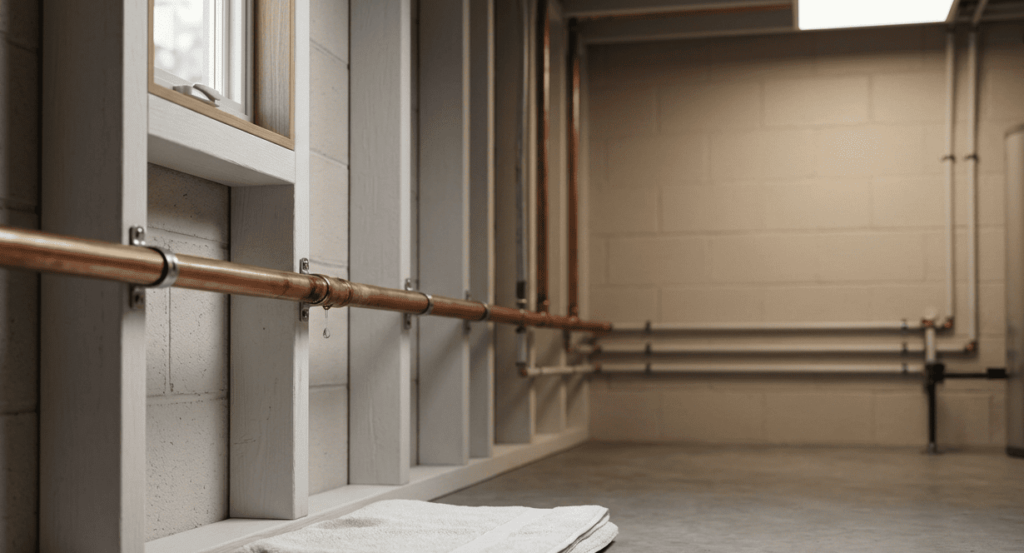
If you notice water pooling near your furnace, staining on the walls or ceiling adjacent to your HVAC system, or a musty odor in your utility room or basement, do not assume it will resolve on its own. The steps to take immediately are:
Turn off the furnace to stop further condensate production until the leak source is identified and repaired.
Call an HVAC technician to inspect the condensate drain system, pump, and heat exchanger. A furnace tune-up that includes drain line cleaning and inspection is the most effective way to catch these issues before they become water damage events – annual maintenance on a high-efficiency system should always include a condensate system check as a standard item.
Assess the surrounding area for moisture. Use a moisture meter on drywall and flooring near the unit if you have one, or look for soft spots, discoloration, and odor. If moisture is present in building materials, professional drying needs to start as quickly as possible.
Contact a water damage restoration company if structural materials are affected. The furnace repair stops the source – restoration handles everything the water already touched. If you are located outside the Spokane area and need certified restoration handled immediately, the team at Little Rock AR Water Damage provides 24/7 emergency response covering extraction, structural drying, and full moisture remediation.
Why Annual Furnace Maintenance Prevents This Entirely
The good news about condensate-related water damage is that it is almost entirely preventable. A professional furnace tune-up that includes condensate drain line flushing, pump testing, and inspection of the drain system costs a fraction of what water damage remediation costs after a drain line failure.
The U.S. Department of Energy recommends annual professional maintenance for furnaces and heating systems to maintain efficiency, safety, and longevity. You can review their full guidance on home heating system maintenance at energy.gov.
In Spokane’s climate, where furnaces run hard from October through April, that annual service appointment is not optional maintenance – it is the single most effective way to keep your heating system from becoming a water damage source.
Do not wait until you see water on the floor. Schedule your furnace inspection before the heating season begins, and make sure the condensate system is specifically included in the technician’s checklist.
Leave a Reply